
How to Search for a Warrant in Gordon County
Gordon County publishes no single warrant search portal. So the dependable Gordon County warrant lookup is a chain of calls, and Georgia's existing-warrant instructions tell you how to prepare. Have a legal first and last name ready, plus a date of birth, know the county, and then contact the local sheriff. One caution matters here. Walking in to ask about a warrant can end in immediate custody, so call first and think about getting legal advice before you show up anywhere. Match your route to the paper you received. Gordon County Superior Court felony records sit with the Clerk of Superior Court. Magistrate Court takes warrant applications, first appearances, bond, committal, and extradition. Calhoun, Fairmount, and Resaca municipal courts each keep their own traffic and ordinance cases. Plainville lists no court route, so City Hall is where to verify first.
- Gather the full legal name, birth date, and any case or citation number.
- Call GCSO at 706-629-1244 or 706-629-1245 and ask for Judicial Bureau, Court Services, records, or jail routing.
- Contact the issuing court: Superior Clerk at 706-629-9533, Magistrate Court at 706-629-6818, or the named municipal clerk.
- Use a narrow Open Records request if the phone and court chain does not supply a releasable record.
- Confirm current status with the issuing court. GCIC is not open for public self-searches.
Gordon County Warrant Phone Chain
The Gordon County Sheriff's Office divisions page lays out the Judicial Bureau, which does the work a public warrant portal would otherwise do. Its Court Services unit receives and serves warrants, summonses, and other court process, and staff can steer a caller to the right spot. That helpful routing role is not the same as a searchable Gordon County warrant database, though. The office publishes no such database.
Why does a Gordon County warrant search often take two calls? The sheriff's office may hold the service or jail side of things. The issuing court keeps the court file and handles any recall or lift. The sheriff's official contact page lists the main office, the jail, hours, phone lines, and email for that chain.
Skip the trip and pick up the phone. Walking into a sheriff's office to ask about a warrant in Gordon County can end with you in custody, so a call is the safer first move. The right number depends on which court issued the paper. City citations go to the city court: Calhoun at 706-602-5790, Fairmount at 706-337-5306, or Resaca at 706-624-1336. If your case sits in Superior or Magistrate Court, do not lean on a municipal payment site. That portal cannot confirm a county court warrant.
Gordon County Warrant Search Fields
Gordon County publishes no warrant-search form with required fields, so a warrant check runs on preparation instead. Gather identifiers before you call. Give the clerk or deputy enough detail to match an existing warrant record. Where a field shows "Unspecified," the official source did not mark it as required. You are asking for a lookup, not a new list.
| Field Label | Type | Required | Notes |
|---|---|---|---|
| First name | Text | Unspecified | State guidance and GCSO request field |
| Middle name | Text | Unspecified | GCSO request field |
| Last name | Text | Unspecified | State guidance and GCSO request field |
| Date of birth | Date or text | Unspecified | Helps distinguish similar names |
| Case number | Text | Unspecified | Useful for clerk confirmation |
| Citation number | Text | Unspecified | Used for eligible Calhoun payments |
| Issuing city or court | Dropdown | Likely selection | Shown by GovernmentWindow |
No public field filters by status or warrant type. When calling about Gordon County records, quote the exact court name and label from your paper.
Gordon County Warrant Records Fallback
When phone calls come up empty, file a records request. The GCSO Public Records page takes them online, by phone, mail, or walk-in. The form asks for names, contact details, incident date, case number, location, and report type. Pick or describe "other" for an existing warrant-related record. Then ask for the warrant type, issue date, status, bond information, service return, or clearance record if those items are releasable.
A records request is not a live Gordon County warrant search, but it is the official fallback. GCSO says it may ask for identification, though ID is not required to submit. Expect a response within three business days. It arrives as records, a cost estimate, or a denial that states the legal basis. The first 15 minutes of search and retrieval time are free. After that, the published rate effective August 15, 2026 is $21.68 per hour, billed in $5.42 quarter-hour steps. Paper copies run $0.10 per page. These are public-record charges, not a warrant-clearance fee.
What a Gordon County Warrant Search Returns
A confirmed Gordon County warrant record can hold more than a name. The most useful parts name the issuing court, the type of process, current status, and any bond or appearance instruction. Gordon County has published no warrant-number format, so take the number exactly as the clerk reads it to you. Whatever the clerk gives you is the number to use.
| Warrant or case number | The local identifier, shown here only as COURT-ISSUED NUMBER; no public format is published. |
|---|---|
| Reason or offense | A charge, citation, missed setting, contempt issue, or other stated basis. |
| Issuing court | Superior, Magistrate, or a municipal court, which controls the next step. |
| Bond | An amount and type if set; there is no universal Gordon County figure. |
| Status | Active, served, returned, recalled, lifted, quashed, or cleared as defined by that office. |
| Dates | Issue, service, return, missed appearance, payment, or clearance dates when available. |
"Returned" does not always mean "cleared." Lifting a warrant does not dismiss the underlying charge either. Ask the clerk in Gordon County to explain the current status plainly.
Gordon County Clerk Holds Criminal Warrants
The Clerk of Superior Court page states it plainly: the office files criminal cases and maintains criminal warrants. You will find it at 101 South Piedmont Street in Calhoun. The published phone number is 706-629-9533, with weekday hours of 8:30 a.m. to 5 p.m. Those files cover Gordon County Superior Court matters, including felony cases.
The clerk's page draws a firm line for a Gordon County warrant search. The Clerk of Superior Court can confirm what sits in the official Superior Court file, but that office is not the municipal traffic clerk and gives no legal advice. Magistrate and city court records live with their own offices. If a calendar lists a "Motion to Lift Bench Warrant," hand the clerk the case number and the setting details. Ask whether the official file holds an order and which record shows the warrant's current status.
Where Gordon County Warrants Are Checked
Gordon County splits its warrant records by court. The Sheriff's Judicial Bureau and the jail field questions about service, custody, and bond, while the Clerk of Superior Court holds the Superior criminal case files and their warrants. Arrest and search warrant applications, first appearances, bonds, committal matters, and extradition all run through Gordon County Magistrate Court. City traffic and ordinance cases stay with the municipal courts. For dates and hearings, the county's Court and Trial Information page publishes public calendars, though it cautions that entries are preliminary and may change or carry errors and omissions.
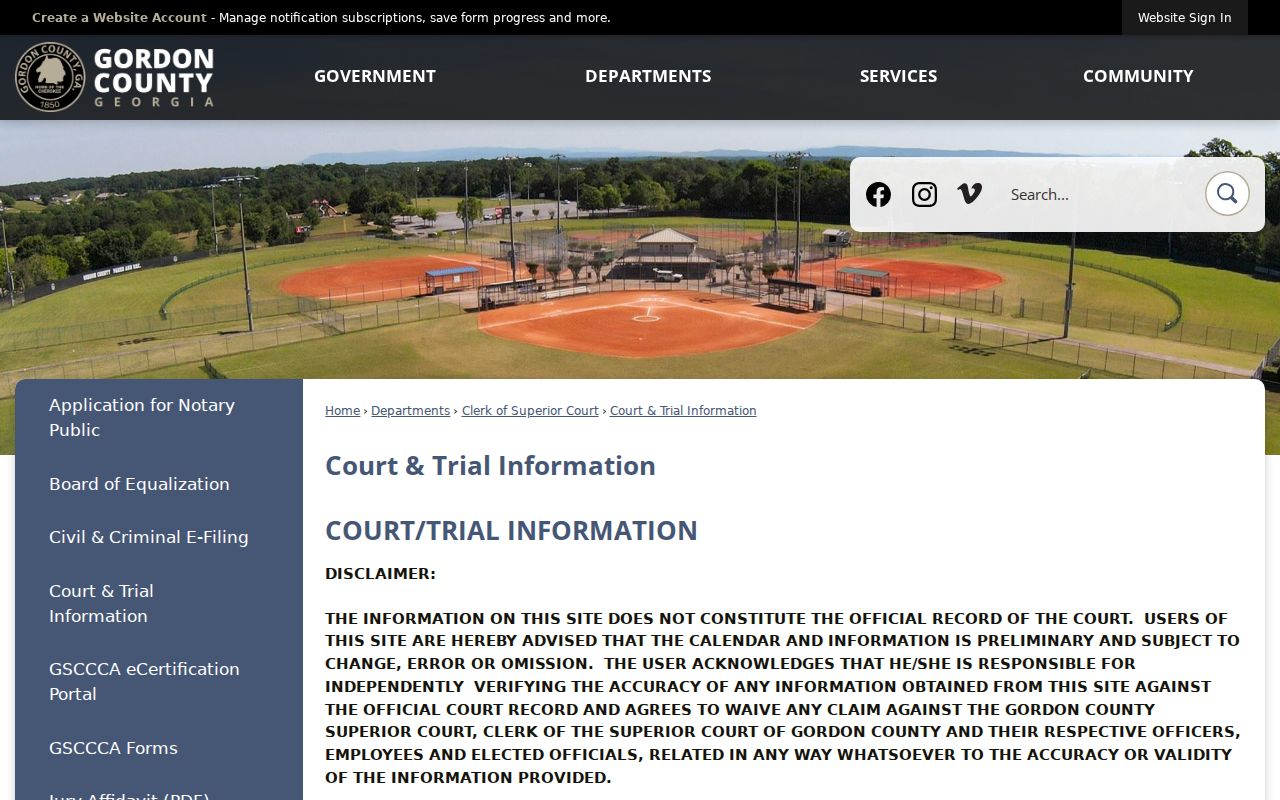
A Gordon County calendar entry is a lead, not the warrant itself. Check any motion, FTA date, or hearing note against the official clerk record.
No Public Gordon County Warrant Database
The Georgia Crime Information Center runs a criminal-justice network that holds wanted-person data. Access is limited to law-enforcement and criminal-justice agencies. GCIC offers no public statewide Gordon County warrant lookup, and no search fields are exposed to the public.
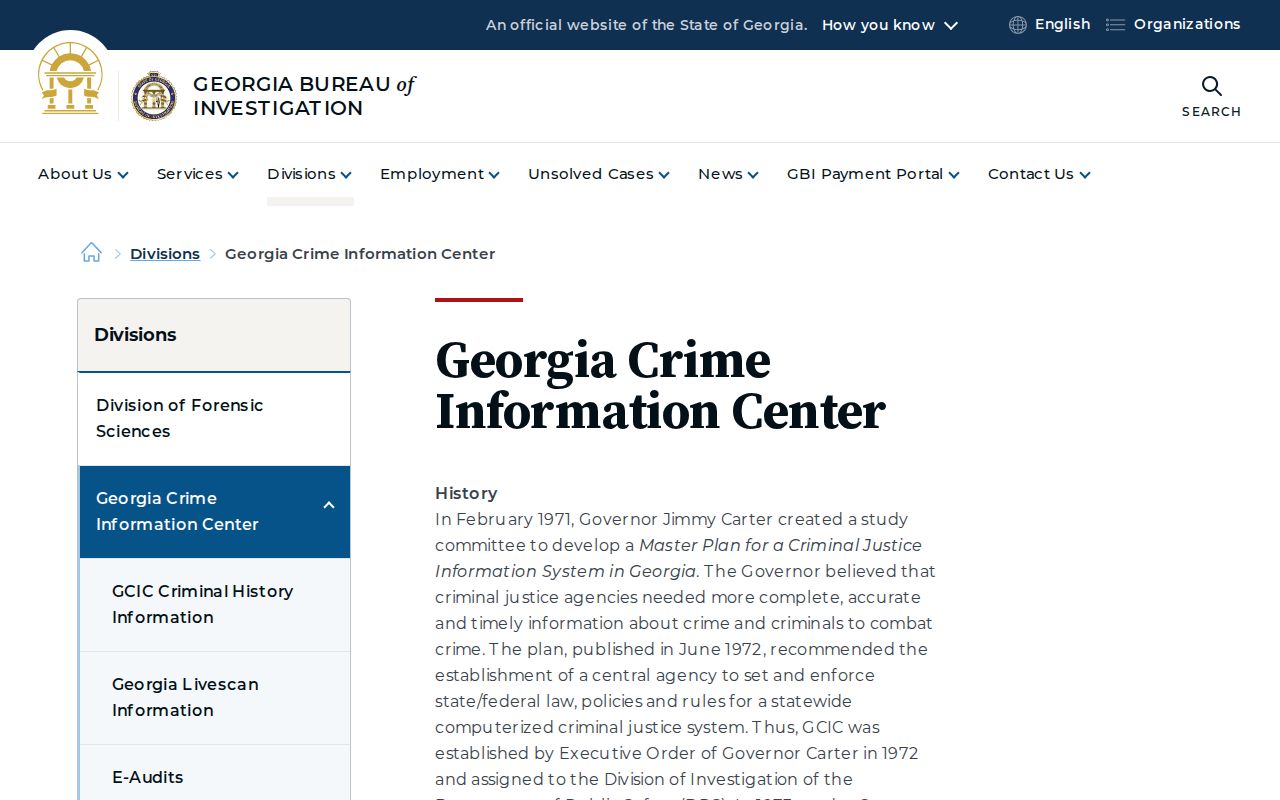
The state's own page points the public back to local sources: Georgia directs warrant inquiries to the county sheriff, while GCIC works behind the scenes for authorized agencies. A separate wrinkle is a traffic failure to appear, which can also trigger a Department of Driver Services suspension. That license consequence stands apart from the warrant status, so verify the court record and any DDS release separately.
Gordon County Warrant Status Terms
Small wording changes matter in a warrant record. An active or outstanding warrant is one that no court has cleared, recalled, or served. "Served" means an officer carried out the process. "Returned" means a service result went back to the issuing court, and it does not always mean the case is finished.
- Bench warrant
- A judge-issued arrest process often tied to a missed court date or failure to comply.
- Recalled or lifted
- The judge or court removed the warrant after an authorized step.
- Quashed
- The court set aside the process; written confirmation still matters.
- FTA
- Failure to appear at the time required by a citation or court order.
Gordon County public pages use "bench warrant" and "failure to appear." The county does not use "capias pro fine" as a current label. Copy the wording from your own notice rather than assuming an out-of-state term applies.
Access and Restricted Warrants
The Georgia Open Records Act, O.C.G.A. §§ 50-18-70 through 50-18-76, supports access to agency records while preserving exemptions. Active investigations, confidential sources, security-sensitive facts, sealed process, protected identifiers, and juvenile material can all be withheld or redacted. An agency may release only part of a Gordon County warrant record. It may also explain why no public copy can be handed over.
Key rules: A missing web result is not proof that no warrant exists.
Juvenile records do not follow the ordinary adult public-access route.
Confirm a current, served, returned, or lifted warrant with its issuing court and the sheriff.
Ask for an existing, well-described record rather than a new countywide compilation. A narrow request is easier to identify. It also lets the custodian state which parts can lawfully be released.
Note: The county and sheriff may redact a record while still releasing the public portions that can be separated.